Insights Strategy
Riyadh is not a global template: what changes when you market here
Most brands that enter Saudi Arabia arrive with a playbook that worked somewhere else: London, Dubai, Cairo or a head office in Europe. The strategy is usually sound. The execution is where it goes wrong, because Riyadh behaves differently from almost every market the playbook was written for.
Here are the differences we see most often, and what to do about each one.
1. The audience is young, and it is on Snapchat
Around 71% of Saudi Arabia’s population is under 35, according to the 2024 Saudi Family Statistics report by GASTAT. That shapes everything, starting with the channel mix.
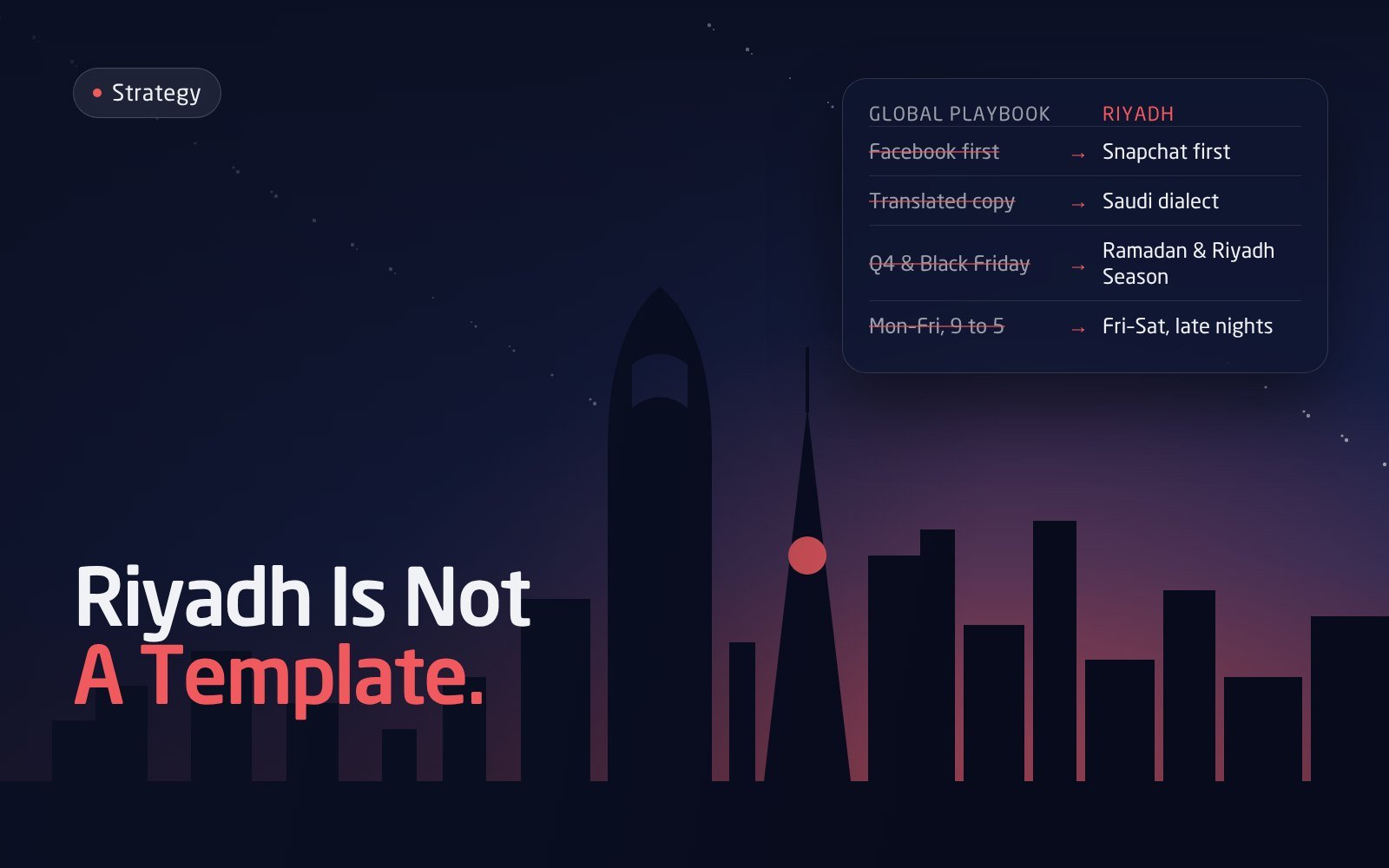
Global plans tend to start with Meta and add TikTok. In Saudi Arabia, Snapchat’s ad reach is around 73% of the total population — ahead of Instagram and Facebook, which each reach around half (DataReportal, Digital 2026: Saudi Arabia). YouTube and TikTok are close behind.
What to do: plan Snapchat and TikTok as primary channels, not extras. Build vertical, sound-on content first and cut down for other placements, rather than the other way round.
2. Translation is not localisation
A translated English caption reads like a translated English caption. Saudi audiences notice instantly. The brands that win write in Arabic first, often in a light Saudi (Najdi or Hijazi) tone for social, and keep Modern Standard Arabic for formal pages.
- Write the Arabic and English versions as two pieces of copy, not one.
- Use local faces, local places and local humour in content.
- Check that names, prices and offers read naturally right-to-left on every design.
3. The calendar is different
Q4 and Black Friday matter, but they are not the peak of the year. The Saudi marketing calendar is built around:
- Ramadan and Eid — a complete shift in daily rhythm, with late-night browsing and family gatherings.
- Founding Day (22 February) and National Day (23 September) — two of the biggest moments for brand content.
- Riyadh Season — Riyadh Season 2024 passed 18 million visits, and it changes footfall, events and media prices across the city.
- Summer and school holidays, when many families travel and city spending drops.
What to do: build the annual plan around this calendar first, then fit global campaigns into it.
4. The day runs later
The weekend is Friday and Saturday, and the busiest hours for dining, shopping and scrolling run well into the evening. Ad schedules, posting times and customer service hours copied from a 9-to-5 market miss the moment.
5. Trust comes from people
Word of mouth, family decisions and creators carry more weight than brand claims. Creator campaigns work well — but influencers in Saudi Arabia need a valid Mawthooq licence, and paid content has to be disclosed. Factor both into timelines and budgets.
6. Search starts on the map and in the chat
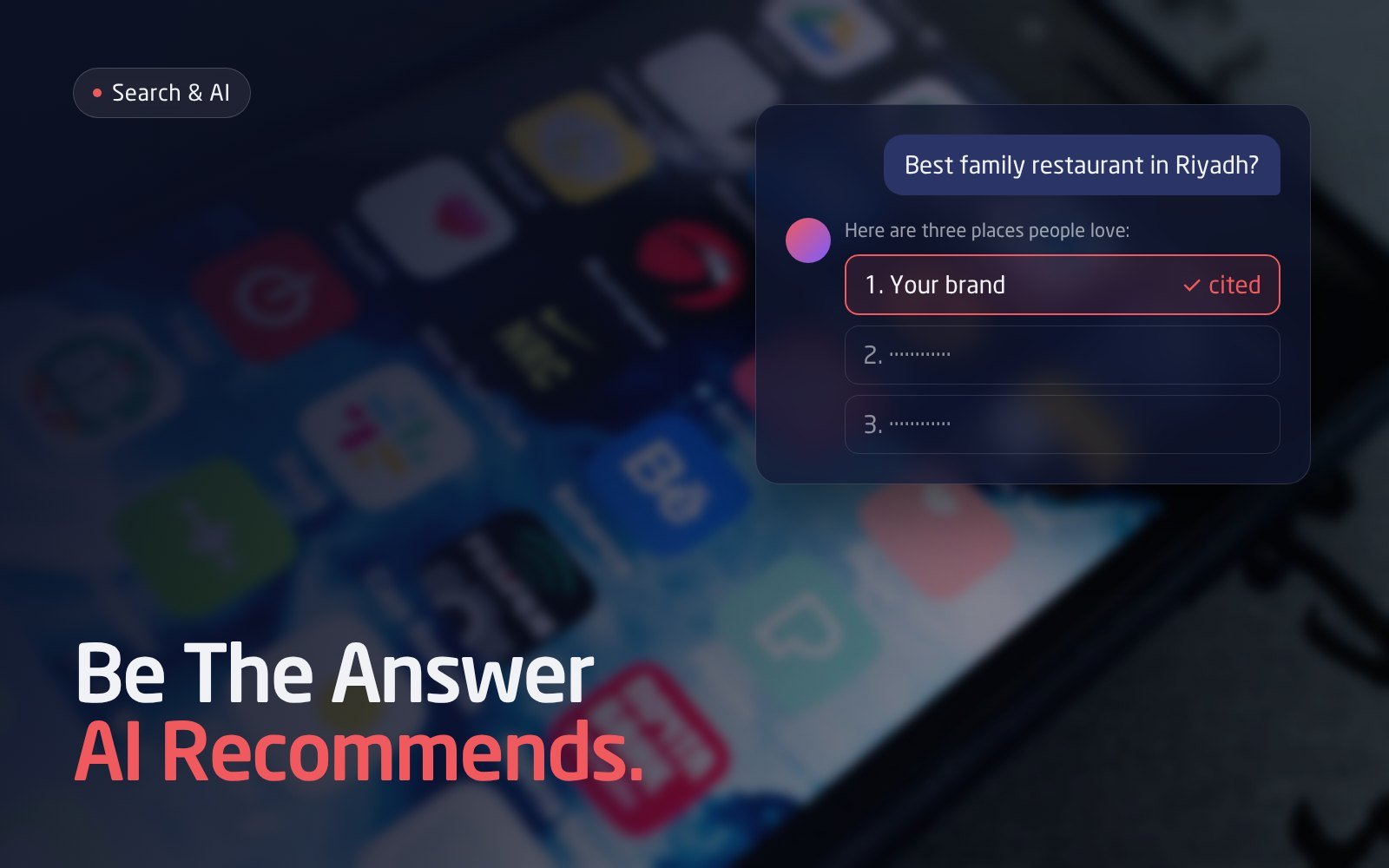
A large share of discovery happens on Google Maps, inside delivery and booking apps, and increasingly in AI assistants. A strong Google Business Profile and GEO-ready content often matter more than a perfect homepage.
A quick checklist for global brands
- Rebuild the channel mix around Snapchat, TikTok, YouTube and Google Maps.
- Write Arabic first, in the right tone for each channel.
- Plan the year around Ramadan, Eid, Founding Day, National Day and Riyadh Season.
- Shift schedules to evenings and Friday–Saturday weekends.
- Budget for licensed local creators.
- Measure what matters locally: bookings, calls, store visits and app orders — not only reach.
A global strategy can travel. A global execution rarely does.
If you are bringing a brand to Riyadh, we can help you adapt the plan before you spend the budget.